Searching for the Dutch-Paris Escape Line
Routes Category
If a Truck Breaks Down near the Border
Here’s another example of resisters disguising themselves as collaborators. The collaborationist French government, Vichy, created a paramilitary police force called the Groupe mobile de réserve or GMR (mobile reserve group). They have a nasty reputation from their zealous fight against resisters. And yet, at least a few of them were resisters. For about two years […]
- 0 Comments
- Tags: Border Crossings, Pyrenees
What Happened on the Other Side of the Spanish Border
As an escape line and rescue organization, Dutch-Paris ended at the Spanish frontier. The passeurs stopped at the border, handed out some pesetas that Dutch-Paris paid for, pointed the aviators and Engelandvaarders down the mountain towards the closest Spanish village and then turned around and headed back home. The resisters in Dutch-Paris did not know […]
- 0 Comments
- Tags: Allied airmen, Engelandvaarder, Pyrenees, Spain
Another element that made every aviator’s evasion, and indeed every clandestine journey across occupied Europe, different was the fact that the enemy were not robots. Of course the German army and police were professional enough to be predictable, but even they had off days. And their orders changed in ways that resisters could not foresee. […]
Every Evasion was an Ad Hoc Patchwork
Despite the established routes and patterns of escape lines, every Allied aviator’s evasion was wildly unique. Certainly some crew members traveled the length of occupied Europe together and had similar stories. But even in the case of crew mates, men were left behind because of illness or took different trains to make a large group […]
As I’ve mentioned before, there has been a fair amount of speculation about how the Germans found the convoy at the Col du Portet d’Aspet on the night of 5/6 February 1944. Theories have ranged from betrayal to the practical fact that 28 men make a lot of tracks in new fallen snow. But maybe […]
Why Were They Walking Back into Occupied Territory?
Seventy three years ago today six Allied aviators, four Engelandvaarders and a French guide walked north out of the foothills of the Pyrenees, going the opposite direction that they had walked into the mountains on their way to Spain and freedom just two days earlier. Why were these men returning to occupied territory? On the […]
- 0 Comments
- Tags: Allied airmen, arrests, Border Crossings, France, Pyrenees
The Train Stations Used by Dutch-Paris
If you read the earlier post about trains, you know that a lot has changed about railway journeys since 1944. Another thing that has changed in some places, is the train stations. On a small scale, you used to have to buy a “platform ticket” in order to enter the platforms. So if you wanted […]
Wartime Railway Journeys
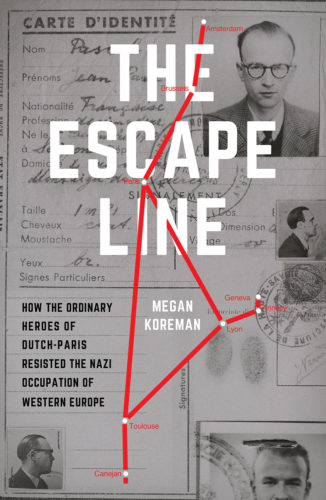
If you were to trace the steps of Dutch-Paris couriers and guides, you would do most of it by train. Like all civilians during the occupation, they relied on the railway to get themselves and those they were helping from one city to another. So you could get on a train in Amsterdam and follow […]
- 0 Comments
- Tags: Border Crossings
In the last post I asked how much a map of an occupied city can really show of what it would have been like to walk from one place to another in a city hushed by gasoline rationing, darkened by air raid precautions and filled with dread. We can ask the same question about clandestine […]
I’ve been thinking about maps of Dutch-Paris. The line covered so much territory that the story needs many maps: Dutch-Paris’s routes through the Netherlands, Belgium and France; maps of the clandestine crossing places from the Netherlands to Belgium, from France into Switzerland and from France to Spain; maps of Dutch-Paris places in the main cities […]